

The real estate tokenization market reached $2.6 billion in 2024 and is projected to hit $19.4 billion by 2033 at a 21% compound annual growth rate. Yet behind these impressive figures lies a gap between marketing promises and investor reality.
This guide reveals seven critical truths that platforms don’t advertise: hidden fees that slash returns in half, liquidity traps that lock you in for months, and tax complexity that demands professional help.
Before you invest a dollar in tokenized real estate, you need to understand what really happens behind the scenes.
What You’ll Learn:
- Liquidity is mostly an illusion
- You don’t actually own the property
- Fees eat your returns
- You can’t control anything
- Taxes are complicated
- Platforms can fail
- Exiting is harder than entering
1. Liquidity Is Mostly an Illusion
Platforms promise you can “sell anytime,” but that’s only true if someone wants to buy.
Imagine trying to sell a rare Pokémon card—sure, you own it, but if nobody’s buying that day, you’re stuck with it. Most tokenized real estate markets have tiny trading volumes with only hundreds of active participants, meaning you might wait months to exit your position.
What the Data Actually Shows
Trading volume data tells the real story about tokenized real estate investing. Research from July 2025 shows that most real world assets in the real estate category exhibit low trading volumes despite their tokenized form.
A typical tokenized property with a $2 million valuation might only see $5,000-$10,000 in daily trades. That’s a 0.25-0.5% daily liquidity ratio compared to REITs that often exceed 5-10%.
The core problem: tokenized real estate tokens trade on platform-specific marketplaces with limited participants. Unlike stocks on the NYSE with millions of traders, these markets might have only hundreds of active users.
Order books are thin, bid-ask spreads frequently reach 5-10%, and large sales can move prices significantly.
Platform Performance: RealT Case Study
RealT, one of the longer-established platforms (operating since 2018), shows how volume concentrates in governance tokens rather than property tokens.
As of late October 2025, RealToken Ecosystem Governance (REG) has a 24-hour trading volume of approximately $92-$4,896 depending on the market, with individual property token volumes significantly lower.
This represents a liquidity ratio of roughly 0.75-3.27% daily across the platform’s total $11-$15 million market cap.
Secondary market monthly turnover data from research studies shows that after initial investment periods, most properties maintain only 5% turnover with some showing zero trades in extended periods.
Real Example: James R.’s 4-Month Exit
James R., a software engineer from Austin, Texas, invested $10,000 in RealT tokens representing a Cleveland residential property in March 2024. The platform advertised “trade anytime” with 24/7 liquidity. The property showed a projected 9.2% annual yield.
Six months later, James faced an unexpected job relocation requiring capital.
When he attempted to sell his tokens in September 2024, he discovered only three active buyers on the RealT secondary market. The highest bid was 15% below his purchase price.
After posting at a 5% discount, the tokens sat unsold for 47 days. It required three additional months to sell the remaining 50% of his position at an 8% total loss.
📊 The Reality:
- Time to fully exit: 4 months
- Total loss: $800 + transaction fees
- Property performance: Good (9.2% yield maintained)
- The problem: Finding buyers in an illiquid market
💡 Key Takeaway: Trading volumes average 0.25-0.5% daily compared to REITs at 5-10%. Expect to wait months to exit at a discount, not sell instantly as advertised.
2. You Don’t Actually Own the Property
When you buy fractional real estate tokens, you’re not buying real estate—you’re buying shares in a company that owns real estate.
It’s like buying stock in McDonald’s. You own part of the corporation, not the hamburgers or buildings.
The Legal Structure Behind Tokens
Tokenized real estate uses a legal structure called a Special Purpose Vehicle (SPV) or Limited Liability Company (LLC) to hold the property.
The deed lists the SPV as the recorded owner, not you. When you buy tokens, you own membership units in that LLC—not the property itself.
Why This Matters
This creates three critical issues:
1. Minimal Governance Rights
While you technically own part of an entity that owns real estate, you have no say in maintenance decisions, repairs, or property management.
2. Legal Ambiguity
The legal relationship between your token and your actual rights is complex. American property law doesn’t recognize bearer instruments that would transfer ownership simply by holding a token. This creates ambiguity about your actual legal standing if disputes arise.
3. Distance From the Asset
If the LLC faces legal challenges unrelated to the property itself, your token investment could be affected. The SPV structure provides some liability protection, but it also creates distance between you and the actual asset.
You’re relying on the platform and the SPV’s legal team to maintain proper documentation linking the blockchain token to property deeds filed in county records.
Real Example: The $22,500 Roof Repair
A Securitize platform investor held stakes in three residential properties through the platform’s framework—two single-family homes in Denver and one fourplex in Portland.
When the Denver property needed a $18,000 roof replacement, the investor expected to vote or influence the decision as a token holder.
Instead, they received a notice that the property’s management company had already contracted the repair at $22,500—$4,000 above market quotes.
The investor had no recourse because the LLC operating agreement gave all decision-making authority to the designated property manager.
The repair costs were deducted from rental distributions, reducing that year’s returns from 8.5% to 5.2%.
Despite owning 12% of the LLC on paper, the investor had zero control over the outcome or ability to challenge the pricing.
📊 What Happened:
- Investor’s ownership stake: 12% of LLC
- Expected roof cost: $18,000
- Actual cost charged: $22,500 (22% markup)
- Investor’s voting rights: Zero
- Return impact: Dropped from 8.5% to 5.2%
💡 Key Takeaway: You own shares in an LLC, not the property. Management makes all decisions—repairs, maintenance, tenant selection—without your input or approval.
3. Fees Eat Your Returns
An “8% return” advertised by tokenized real estate investing platforms can become 4-5% after fees.
It’s like buying a concert ticket—the ticket says $50, but after service fees, processing fees, and delivery fees, you pay $73. Multiple fee layers compress advertised yields significantly.
The Fee Structure
Blockchain real estate platforms charge fees at multiple stages:
- Transaction/Entry Fees: 1-2% when you purchase tokens
- Annual Management Fees: 1-2% annually for managing the property and processing distributions
- Performance Fees: 10-20% of net gains earned by the property
- Issuer/Tokenization Fees: 2-5% when initially tokenizing a property
- Exit/Redemption Fees: 2-5% (not always disclosed upfront)
How Fees Compound: Real Numbers
Here’s how fees accumulate on a $10,000 investment with 8% advertised yield:
YEAR 1 (One-time + annual fees):
- Purchase transaction fee (1.5%): -$150
- Gross rental income: +$800
- Annual management fee (2% of $10,000): -$200
- Performance fee (12% of net distributions): -$72
Year 1 Net: $378 total return (3.78%)
YEAR 2+ (Recurring annual fees, no entry fee):
- Gross rental income: +$800
- Annual management fee (2%): -$200
- Performance fee (12%): -$72
Year 2+ Net: $528 annually (5.28%)
This converts the advertised 8% yield into 3.78% in Year 1 and 5.28% in subsequent years—roughly half the advertised amount.
Many investors discover this only after analyzing their first distribution statement when it’s too late to withdraw without exit penalties.
Real Example: Sarah’s Three-Platform Investment
Sarah invested $15,000 in three separate tokenized real estate properties on different platforms in Q1 2024:
- Property A: Polymath-regulated offering
- Property B: RealBlocks platform
- Property C: Securitize
Each advertised 8-10% annual returns.
She received her first quarterly distributions in April 2024:
- Token A (Polymath): Received $289 = 3.8% annualized
- Token B (RealBlocks): Received $156 = 2.1% annualized
- Token C (Securitize): Received $325 = 5.2% annualized
What the Statements Revealed
When she reviewed the detailed statements, she discovered:
- Transaction fees: $225 (1.5% entry across 3 properties)
- Management fees Q1: $180 (2% annual rate, quarterly deduction)
- Performance/custody fees Q1: $340 combined
She contacted support asking why returns were 50% lower than advertised.
Support explained: “The advertised yields are gross returns before platform fees. Individual investor net yields vary based on fee structures.”
Her $15,000 investment would need to generate $2,200+ in returns just to break even on fees alone if held for 10 years.
📊 The Math:
- Advertised returns: 8-10%
- Actual net returns: 2.1-5.2%
- Fee drag: 50-75% of gross yield
- Years to break even on fees: 10+ years
💡 Key Takeaway: Advertised 8% yields become 3.78% (Year 1) and 5.28% (Year 2+) after all fees. Always calculate net returns after transaction, management, performance, and exit fees.
4. You Can’t Control Anything
Own 100 shares of Apple stock and you can vote at shareholder meetings. Own tokenized real estate and you can’t even choose who fixes the air conditioning.
Most platforms centralize all management decisions while you sit passively.
The Governance Reality
Governance rights in tokenized real estate are typically minimal. The LLC operating agreements usually grant the platform or its appointed management company full authority over property decisions.
Token holders are classified as passive investors, not partners with voting rights.
What You Can’t Control
Key decisions made without token holder input:
- Refinancing terms and timing
- Property sales and exit strategy
- Major repairs and contractors
- Rent increases and lease terms
- Eviction proceedings
- Insurance claims and coverage
Some platforms like Polymath offer governance tokens that theoretically enable voting, but in practice, coordinating hundreds or thousands of distributed token holders to achieve quorum is difficult.
Research on governance in traditional real estate partnerships shows that investor apathy is common; many don’t participate in votes when given the opportunity.
Information Asymmetry Problem
The platform and management company typically have superior information about:
- Property conditions and maintenance issues
- Tenant problems and payment history
- Market comparables and rental rates
- Repair quotes and contractor performance
Token holders learn about problems only after the fact, after management has already made decisions.
If you disagree with how a property is managed, you have no mechanism to change course except selling—which brings you back to the liquidity problem from Section 1.
Real Example: The Dallas Income Decline
Investors in a RealBlocks tokenized real estate project in Dallas noticed their property’s rental income declining month-over-month starting in June 2024:
- Quarter 1: Distributed $2,400
- Quarter 2: Distributed $1,890 (21% decline)
When investors inquired about the decline, management reported “normal seasonal variations and temporary tenant transitions.”
Two months later, token holders discovered through property records that the building had experienced tenant turnover and management hadn’t aggressively marketed rental units.
A local property management company could have filled the units within 30 days at market rates. By the time investors could investigate, nearly four months of potential rent—approximately $8,000 at stabilized rates—had been lost.
What Investors Couldn’t Do:
- Access property records
- Review lease terms or marketing strategy
- Interview or replace property management
- Approve or reject management decisions
- Set timeline for filling vacancies
They were entirely dependent on management’s decisions and timeline. The lost income permanently reduced their returns from 8.5% to 6.2% for that year.
📊 The Impact:
- Income decline: 21% (Q1 to Q2)
- Lost rent over 4 months: ~$8,000
- Investor control: Zero
- Return reduction: From 8.5% to 6.2%
💡 Key Takeaway: Management controls all property decisions—repairs, tenants, maintenance, sales. Token holders have no voting rights, no veto power, and no recourse except selling in an illiquid market.
5. Taxes Are Complicated
Doing taxes with one W-2 job is straightforward. Now imagine adding rental income from multiple properties across three states, capital gains from token trades, depreciation calculations, and potentially foreign tax withholding—all from tokenized real estate investments.
The K-1 Form Requirement
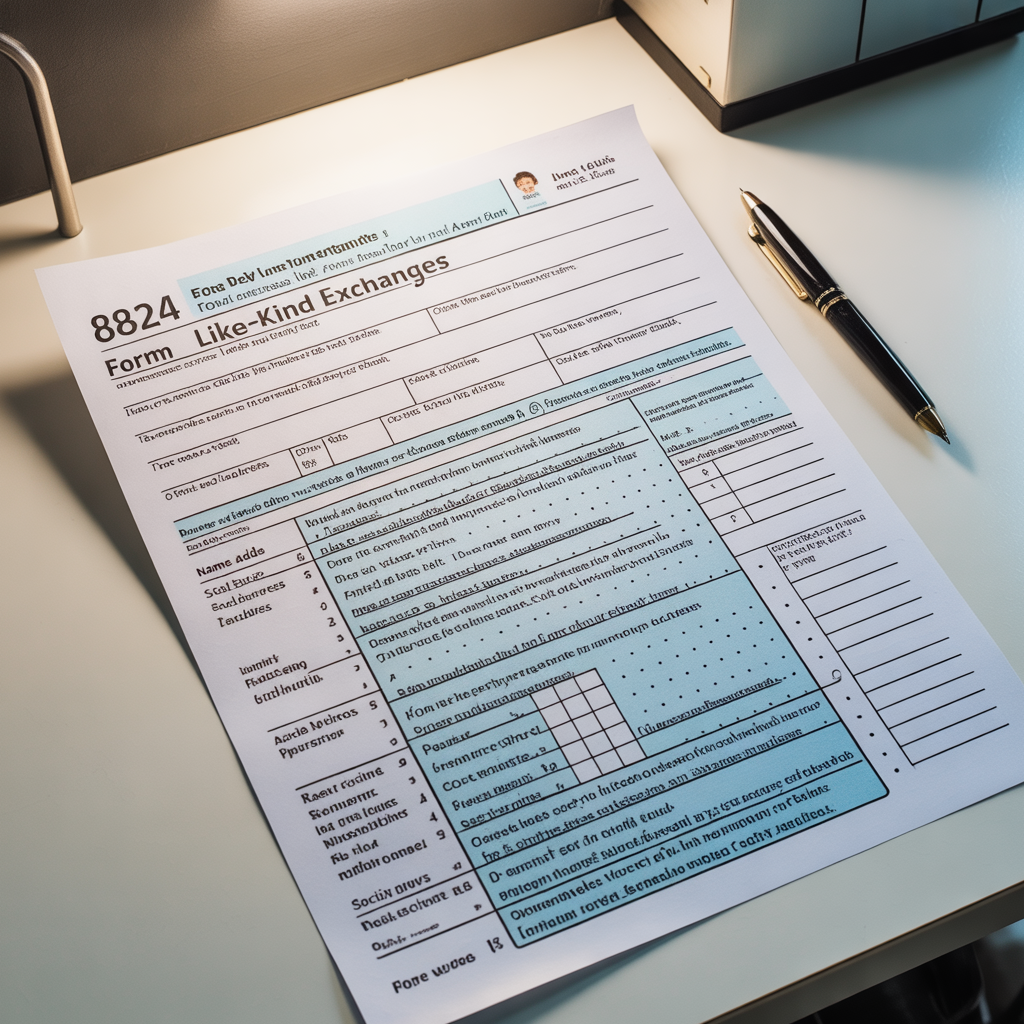
Real world assets structured as tokenized real estate typically operate through LLCs taxed as partnerships. This means you receive a Schedule K-1 form for each property you invest in, not a simple 1099 like stock investments.
What the K-1 Requires You to Report
The K-1 form requires you to report your share of:
- Rental income (before deductions)
- Operating expenses you must deduct
- Depreciation allocated to your ownership share
- Capital gains or losses from property appreciation
- State and local taxes in the property’s jurisdiction
- Potentially foreign taxes if the platform operates internationally
The Depreciation Complication
For depreciation specifically, residential real estate depreciates over 27.5 years.
This creates phantom income—you might report depreciation losses on your K-1 while actually receiving rental distributions. The interplay between depreciation deductions and actual income creates tax situations that generic tax software can’t handle.
The Double Reporting Problem
Additionally, if you sell your tokens on a secondary market, you may receive a Form 1099-DA for the token sale, while simultaneously receiving a K-1 for your ownership stake in the underlying property.
The IRS guidance is still evolving on whether this creates duplicate reporting or coordinated reporting, leaving tax treatment unclear for many investors.
The Bottom Line: Multiple K-1s from multiple properties across multiple states? You’ll likely need a professional accountant experienced with real estate partnerships, costing $500-$2,000+ annually to file correctly.
Real Example: Michael’s Five-Property Tax Nightmare
Michael invested in five different tokenized real estate properties on three different platforms (RealT, Lofty AI, and Securitize) across four states during 2024:
- Properties 1 & 2 (New York): K-1 showing rental income subject to New York state income tax (6.85%)
- Property 3 (Texas): K-1 with no state income tax implications
- Property 4 (California): K-1 with California state income tax (9.3%)
- Property 5 (Colorado): K-1 with Colorado state income tax (4.63%)
What Happened at Tax Time
His first tax season in early 2025 arrived with stacks of documents: five K-1 forms from five different LLCs, each operating in different states with different tax implications.
His standard tax software wouldn’t accept multiple K-1s from different entities. He hired a CPA specializing in real estate for $1,800.
The accountant discovered that one platform had issued both a K-1 and a 1099-DA for a token sale, creating potential duplicate reporting issues.
The final amended return took eight months to resolve with multiple IRS correspondence items.
📊 The Costs:
- CPA fee: $1,800
- Additional correspondence: 8 months
- Total tax prep cost: $2,200+
- Net return reduction: ~1.5% across all investments
- Tax forms received: 5 K-1s + 1 1099-DA
💡 Key Takeaway: Each property generates a K-1 form requiring multi-state tax filing. Generic tax software won’t handle it. Budget $500-$2,000 annually for professional tax prep, which reduces net returns by 1-2%.
6. Platforms Can Fail
Your tokens live on a blockchain forever—that part is immutable. But if the platform managing the property shuts down, who collects the rent? Who fixes broken pipes?
The blockchain doesn’t call plumbers or process tenant applications.
The Platform Dependency Problem
Platform risk is significant in blockchain real estate investing. Platforms maintain centralized control over:
- Income distribution processing
- Property management coordination
- Legal compliance and reporting
- Tenant relationships and collections
If a platform ceases operations, several cascading problems emerge.
What Happens When Platforms Fail
Income Collection Interruption
Rent still flows to the property account, but platforms handle tenant management, collections, and distribution processing. If the platform disappears, who manages this?
Legal Authority Ambiguity
Property deeds are recorded with the LLC/SPV, not the platform. But the LLC’s operating agreements often designate the platform or its appointed manager as the sole property administrator.
If that entity ceases to exist, who has authority to make decisions?
Data and Documentation Loss
While the token exists on-chain, the off-chain legal documents, tenant leases, maintenance records, insurance policies, and property management authority may exist only on the platform’s servers.
Platform failure could mean loss of critical documentation.
Secondary Market Collapse
Even if the underlying property remains valid, your ability to trade tokens evaporates. Secondary market functionality depends entirely on platform infrastructure.
Regulatory Oversight Doesn’t Guarantee Stability
The SEC’s regulatory stance (updated June 2025) acknowledges this risk. Tokenized real estate is classified as a security, requiring platforms to maintain proper custodial arrangements and follow strict compliance protocols.
However, regulatory compliance doesn’t guarantee financial stability.
The crypto industry has seen major platform failures despite regulatory registration. Nasdaq’s September 2025 proposal to enable tokenized securities trading on traditional exchanges suggests recognition that current platform infrastructure needs modernization.
Real Example: Lessons from Mantra and Crypto Platform Failures
While no major dedicated tokenized real estate platform has completely shut down as of late October 2025, the broader crypto ecosystem provides cautionary examples.
The Mantra (OM) Case
Mantra (OM token) was certified by Dubai’s Virtual Assets Regulatory Authority (VARA), giving investors confidence in regulatory oversight.
Yet when market conditions deteriorated and token economics unraveled, investors faced massive losses despite regulatory certification. This illustrates that regulatory approval doesn’t guarantee project success or platform stability.
Celsius and Voyager Digital Bankruptcies
When crypto platforms like Celsius and Voyager Digital filed for bankruptcy in 2022-2023, despite years of operations and claimed compliance, token holders discovered that:
- Their assets were frozen indefinitely
- Recovery processes took months to years
- Many investors received only partial recoveries
A property ownership structure is only as solid as the platform managing it.
📊 Platform Risk Factors:
- Regulatory approval: Necessary but not sufficient
- Years of operation: Not a guarantee of stability
- Token on blockchain: Immutable, but meaningless without platform infrastructure
- Off-chain dependencies: Property management, legal docs, distributions
- Recovery time if platform fails: Months to years, if possible at all
💡 Key Takeaway: Your token exists on-chain, but rent collection, distributions, property management, and secondary markets all depend on centralized platform infrastructure. Platform failure could lock up your investment indefinitely.
7. Exiting Is Harder Than Entering
Getting into tokenized real estate investing takes 5 minutes and a credit card. Getting out takes finding someone willing to buy your tokens—which could take months, or might not happen at all.
Entry and exit experiences are completely different.
The Entry Experience vs. Exit Reality
Platforms use clever design to make buying easy:
- Simple KYC verification (15 minutes)
- One-click purchasing with credit card
- Automatic distribution setup
- Instant token delivery
Exiting involves navigation of multiple restrictions that aren’t advertised upfront.
Exit Restrictions You’ll Face
Lock-Up Periods
Under Regulation D compliance, many tokenized real estate offerings impose 6-month to 1-year lock-up periods preventing any trading after purchase.
You cannot sell until this period expires, regardless of market conditions or personal circumstances.
Redemption Windows
Some platforms don’t allow continuous redemption. Instead, they establish quarterly or annual exit windows tied to property valuations or refinancing events.
If you need liquidity outside these windows, you’re blocked.
Forced Holding Periods
Once the lock-up expires, you can trade on secondary markets—but as we saw in Section 1, secondary market liquidity is minimal.
Trading is technically allowed; finding a buyer is another matter.
Property-Level Timing
Some structures tie individual exits to property-level events. If a platform decides to refinance or sell a property, all token holders are forced into an exit event, whether they want it or not.
You lose flexibility.
Off-Ramp Complexity
Even when you find a buyer, converting tokens back to fiat currency requires navigating:
- Platform payment systems
- Stablecoin conversions
- Crypto-to-fiat exchanges
- Multiple transaction fees
This multi-step process adds friction and cost compared to entering with a simple bank transfer.
Real Example: David’s 5-Month Exit Across Four Properties
David invested $20,000 across four different fractional real estate tokens on two platforms in early 2024. By mid-2025, he faced a major life change requiring capital access.
Here’s what happened when he tried to exit:
Property A (RealT, Chicago)
- Status: Still in 6-month lock-up from April purchase
- Result: Couldn’t sell until June 2024
Property B (Lofty AI, Atlanta)
- Status: Lock-up expired
- Problem: Secondary market had zero buyers for 3 weeks
- Result: Eventually sold at 12% discount after 25 days
Property C (Securitize, San Francisco)
- Status: Subject to quarterly redemption window
- Problem: Q2 window just closed (June 30)
- Result: 90-day wait until Q3 window opened
Property D (Polymath, Miami)
- Status: Platform initiated refinancing in July
- Problem: Forced redemption at appraiser’s valuation
- Result: $4,600 valuation vs. $5,000 cost basis (8% loss)
📊 The Complete Exit Picture:
- Total time to fully exit: 5 months
- Total loss from timing/discounts: $2,400 (12% of investment)
- Properties that performed well: All 4 (issue was exit, not performance)
- Control over exit timing: Zero
David couldn’t access his capital when he needed it. Even when he could exit, he faced forced prices and significant discounts.
💡 Key Takeaway: Entering takes 5 minutes. Exiting takes 4-6 months with 8-15% losses from illiquidity, even when properties perform well. Lock-ups, redemption windows, and thin secondary markets trap capital.
Platform Fee Comparison
Here’s how fees impact an 8% advertised return across three major platforms:
| Platform | Entry Fee | Annual Management | Performance Fee | Other Fees | Net Return |
|---|---|---|---|---|---|
| Polymath/REtokens | 1.5% | 2% | 15% | Custody: 0.5% | ~4.2% |
| RealBlocks | 2-5% | Included | 10-15% | Legal: varies | ~4.5% |
| Blocksquare | 1-3% | 1.5% | Included | Liquidity: varies | ~5.1% |
The Pattern: Advertised 8% returns become 4-5% after fees across all major platforms.
Questions to Ask Before Investing
Before committing capital to tokenized real estate, demand clear answers to these questions. If platforms avoid or obscure answers, that’s a red flag:
About Liquidity
- What are the actual 30-day, 90-day, and 12-month trading volumes for this specific token? (Request actual data, not projections)
- What is the average time to exit based on historical data?
- What discounts from purchase price do sellers typically accept?
About Ownership Structure
- What legal entity owns the property, and how is my token linked to that ownership in the public deed records?
- Can I inspect the property or access property records?
- What happens to my token if the LLC faces legal issues?
About Fees
- Can you provide a complete fee schedule including transaction, management, performance, exit, and any other fees?
- What is my expected net return after ALL fees (not gross return)?
- Are there any fees that aren’t disclosed in your marketing materials?
About Control
- What governance rights do I have?
- Can I vote on property decisions, refinancing, or sales?
- Who makes decisions about repairs, tenants, and property management?
About Taxes
- Will I receive K-1 forms, 1099 forms, or both?
- Who prepares tax documents, and when are they provided?
- Do you recommend specific tax professionals familiar with your structure?
About Platform Risk
- What happens if your platform is acquired or ceases operations?
- Who maintains the property and collects rent if you shut down?
- Are there third-party custodians or backup management systems?
About Exit
- Are there lock-up periods, redemption windows, or forced holding periods?
- When can I realistically exit?
- What is the process for converting tokens back to USD?
Should You Still Invest?
It’s Not All Bad
Tokenized real estate offers genuine benefits that attract investors:
Lower Barriers to Entry
Platforms like Lofty AI start at $50 and RealT at around $50, compared to six-figure property purchases. This makes real estate accessible to investors who couldn’t afford traditional property investment.
Passive Income Without Management Burden
Automated rental distributions appeal to investors seeking steady cash flow without dealing with tenants, repairs, or property management responsibilities.
Portfolio Diversification
Fractional real estate ownership is genuinely easier than traditional methods. You can own pieces of properties across multiple cities and states with small capital amounts.
Global Access
For international investors, blockchain real estate removes geographical barriers. You can invest in U.S. properties from anywhere in the world.
The Technology Works
Blockchain immutably records ownership. Smart contracts reliably distribute rental income. Tokenization mathematically divides property ownership. These technical aspects function as advertised.
Who Should Consider It
Tokenized real estate may make sense for:
✅ Long-term investors with a 5+ year investment horizon who can weather illiquidity and timing mismatches
✅ Crypto-comfortable investors already familiar with blockchain wallets, stablecoins, and digital asset custody
✅ Portfolio diversifiers seeking real estate exposure without purchasing property or becoming landlords
✅ Deep researchers willing to read all legal documents, analyze fee structures, and model tax consequences before investing
✅ Appropriate portfolio allocation users willing to limit tokenized real estate to 5-10% of a diversified portfolio, not core holdings
✅ Accredited investors meeting SEC requirements (most platforms restrict to accredited-only offerings: $200K+ annual income or $1M+ net worth)
Who Should Avoid It
Tokenized real estate is not appropriate for:
❌ Liquidity seekers who may need capital within 2-3 years; secondary market exits are too uncertain
❌ Risk-averse investors uncomfortable with emerging technology, regulatory uncertainty, or platform risk
❌ Tax-complexity avoiders uncomfortable navigating K-1 forms, depreciation calculations, and multi-state tax situations
❌ Quick-profit seekers expecting capital appreciation in 12-24 months; this is a long-term hold asset
❌ Hands-on investors wanting governance rights and control; you’ll be frustrated by passive structures
❌ Low-documentation-tolerance investors uncomfortable researching whitepapers, legal structures, and platform backgrounds
Conclusion
Tokenized real estate is real, and it’s growing. The market reached $2.6 billion in 2024 and is projected to reach $19.4 billion by 2033.
The technology works. Returns can be legitimate. But the gap between marketing promises and operating reality is substantial.
The Reality Check
Liquidity is limited despite promises of instant trading.
Fees are high despite advertised yields—expect 8% to become 4-5%.
Your control is minimal despite owning tokens.
Taxes are complex despite simplified claims—budget $500-$2,000 annually for professional help.
Platforms carry real failure risk despite regulatory oversight.
Exits are harder than entries despite promotional ease—expect 4-6 month timelines.
How to Approach This Investment
This doesn’t mean avoid tokenized real estate entirely. It means approach it with realistic expectations:
Start small. Test with 1-2% of your portfolio before committing more.
Calculate true net returns. Use the fee breakdown in Section 3, not advertised gross yields.
Read legal documents thoroughly. Understand the LLC structure and your actual ownership rights.
Assume you’re locked in for years, not months. Plan for 5+ year holding periods.
Never invest more than you can afford to lose if the platform fails or market conditions deteriorate.
Budget for professional tax help. Factor $500-$2,000 annually into your return calculations.
Who Succeeds in Tokenized Real Estate
The investors who succeed in tokenized real estate treat it for what it actually is: a high-risk, early-stage investment opportunity with genuine potential but serious limitations.
They’re patient, detail-oriented, and skeptical of marketing claims. They invest small amounts, diversify across multiple properties and platforms, and plan for long holding periods.
Most importantly, they calculate returns based on what actually happens, not what’s advertised.
Legal Disclaimer
This article is for educational purposes only and does not constitute financial, legal, or investment advice.
Tokenized real estate involves substantial risks including illiquidity, platform risk, regulatory uncertainty, and tax complexity. Consult with qualified financial advisors, tax professionals, and legal counsel before making any investment decisions.
Past performance does not guarantee future results.
Sources Cited
[3] Lofty AI, “Ultimate Guide to Real Estate Tokenization 2025”
[7] Primior, “Tokenized Real Estate Reality Check: Don’t Invest Before Reading This”
[16] RWA.io, “RWA Tokenization Pricing: What It Costs in 2025”
[20] Brevitas, “Tokenized Real Estate: How the Next Cycle of Ownership Could Be Fractional and Global”
[21] Primior, “Real Estate Tokenization In 2025: What Blockchain Companies Must Know About SEC Rules”
[24] Trading on Ramp, “My Journey Through Real Estate Tokenization Platforms”
[26] LinkedIn, “Diving Deep into RealT – A Real Estate Tokenization Case Study”
[27] Primior, “Tokenized Real Estate Vs Traditional Investments: Liquidity Comparison”
[30] Prophecy Market Insights, “Real Estate Tokenization Market Size, Trends Forecast to 2035”
[31] arXiv, “Tokenize Everything, But Can You Sell It? RWA Liquidity” (July 2025)
[36] Request Finance, “Tokenizing a Real Estate Empire with RealT”
[37] LinkedIn, “Challenges and Regulatory Concerns in Real Estate”
[39] Baker Tilly, “What to know about real estate tokenization”
[41] Ledgible, “Understanding the Treasury’s Proposed Digital Asset Reporting Requirements”
[42] Katten, “Tokenization of Real-World Assets”
[43] FNRP USA, “What is a Schedule K-1 Form & How Is It Used for Taxes?”
[45] Legal Nodes, “Real Estate Tokenization




Leave a Reply